Introduction to Federal Firearms License (FFL) Applications

A Federal Firearms License (FFL) is a crucial authorization granted by the Bureau of Alcohol, Tobacco, Firearms and Explosives (ATF) to individuals or businesses engaged in the sale, transfer, and/or manufacture of firearms. Obtaining an FFL is a complex process that necessitates adherence to strict federal regulations and requires a thorough understanding of the legal framework surrounding firearm commerce. This process ensures responsible handling and distribution of firearms.
The FFL system is designed to regulate the firearm industry, preventing the proliferation of firearms into the wrong hands and ensuring compliance with federal laws. Different types of FFLs cater to various business models, each with unique requirements. Understanding these distinctions is critical for prospective applicants.
Types of Federal Firearms Licenses
The ATF grants several types of FFLs, each with specific requirements and responsibilities. These licenses are tailored to different business models and scopes of operation. Understanding the specific license type aligns with the applicant’s intended business scope and ensures compliance with the regulations.
- Class 01: This license permits the manufacture of firearms. Strict compliance with manufacturing standards and ATF regulations is required. A comprehensive understanding of manufacturing procedures and federal standards is essential for this license.
- Class 02: This license allows for the wholesale distribution of firearms. This type of license necessitates a substantial financial capacity and proven experience in the firearms industry.
- Class 03: This license permits the retail sale of firearms to the public. Strict adherence to federal regulations on sales, background checks, and record-keeping is crucial for this license.
- Class 04: This license permits the importation of firearms. Importation necessitates strict compliance with international and domestic regulations regarding firearm import.
- Class 05: This license allows for the repair and/or alteration of firearms. Strict adherence to safety regulations and compliance with ATF regulations are paramount.
Legal and Regulatory Framework
The legal and regulatory framework for FFL applications is governed by the Gun Control Act of 1968 (GCA) and subsequent ATF regulations. This framework Artikels the specific requirements for licensing, background checks, and record-keeping. Applicants must meticulously adhere to the guidelines to avoid potential legal ramifications.
The Gun Control Act of 1968 is the primary legislation regulating the sale and transfer of firearms.
General Steps in the Application Process
The FFL application process typically involves several key steps. These steps, if followed precisely, increase the chances of a successful application.
- Gather Required Documentation: This involves compiling all necessary documents as per the ATF guidelines. Accuracy and completeness are paramount in this phase.
- Complete the Application Form: The application form is a critical document, requiring meticulous attention to detail and accuracy.
- Submit the Application: Submitting the application to the ATF via the prescribed channels is crucial. The proper submission method ensures the application is received and processed.
- Pay Application Fees: Payment of the appropriate fees is a critical step in the application process.
- Await ATF Decision: The ATF reviews applications and conducts necessary background checks.
Application Details Table
The following table summarizes the key aspects of the FFL application process.
| Application Type | Required Documents | Processing Time | Contact Information |
|---|---|---|---|
| Class 01 | Business plan, facility layout, manufacturing license, etc. | Variable, typically 3-6 months | ATF’s website for contact details |
| Class 02 | Business plan, financial statements, trade licenses, etc. | Variable, typically 3-6 months | ATF’s website for contact details |
| Class 03 | Business plan, financial statements, store layout, etc. | Variable, typically 3-6 months | ATF’s website for contact details |
| Class 04 | Business plan, import licenses, etc. | Variable, typically 3-6 months | ATF’s website for contact details |
| Class 05 | Business plan, repair certifications, etc. | Variable, typically 3-6 months | ATF’s website for contact details |
Gathering Required Documents
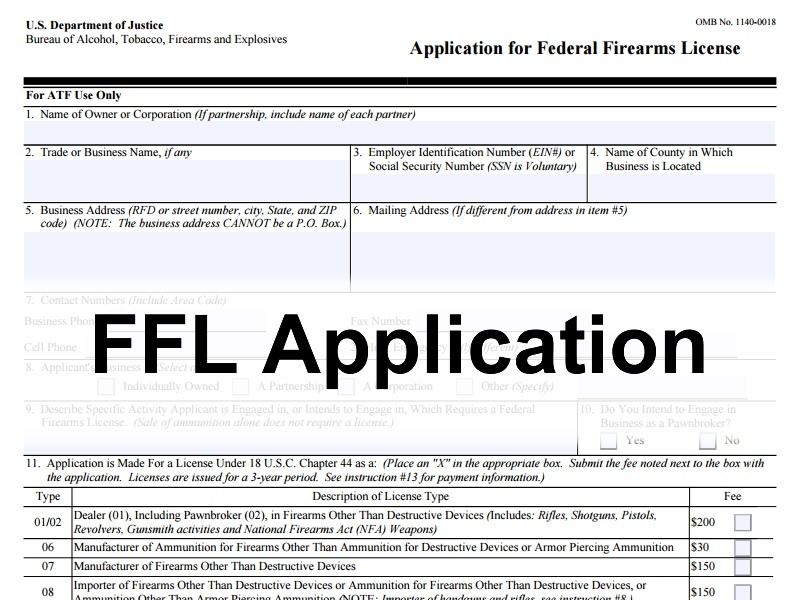
Securing an FFL requires a comprehensive set of documents, meticulously prepared and submitted according to the specific requirements Artikeld by the relevant authorities. Failure to provide the necessary and correct documentation can lead to delays or rejection of your application. This section details the critical documents needed for a successful application.
Required Documents Overview
A successful FFL application hinges on the accurate and complete submission of all requested documents. This section Artikels the necessary documents, categorized for clarity. These documents validate your identity, financial standing, and suitability for handling firearms.
Forms of Identification
Acceptable forms of identification vary but generally include government-issued photo IDs. These IDs must be current and clearly display the applicant’s name, date of birth, and photograph. Examples of acceptable identification include driver’s licenses, state-issued identification cards, or passports. The exact requirements may vary by jurisdiction.
Background Checks
Comprehensive background checks are a critical part of the FFL application process. These checks ensure compliance with federal and state laws regarding firearms ownership and handling. The process typically involves a review of criminal records, ensuring the applicant does not have any disqualifying convictions. The applicant will need to provide the necessary documentation, which may include prior criminal records, or other required paperwork.
Financial Statements
Financial statements are essential to demonstrate the applicant’s financial capability to operate a firearms business. This demonstrates the applicant’s ability to manage the business’s financial responsibilities. The required statements usually include proof of business funds, business bank statements, or personal financial statements. The specifics vary by jurisdiction.
Required Documents Table
| Document Type | Description | Required Format | Submission Method |
|---|---|---|---|
| Application Form | Form outlining applicant’s details, business information, and contact information. | Printed and signed | Mail or online portal |
| Proof of Identity | Current, government-issued photo ID. | Original document | Mail or online portal (copy) |
| Background Check Results | Documentation confirming the applicant’s eligibility for an FFL. | Official report | Mail or online portal (copy) |
| Financial Statements | Demonstrates the applicant’s financial capacity. | Balance sheets, profit and loss statements, or personal financial statements | Mail or online portal (copy) |
| Business Plan | Artikel of business operations, including services offered and target market. | Written document | Mail or online portal |
| Business Licenses | Necessary licenses to operate the business within the jurisdiction. | Original document | Mail or online portal |
Completing the Application Form
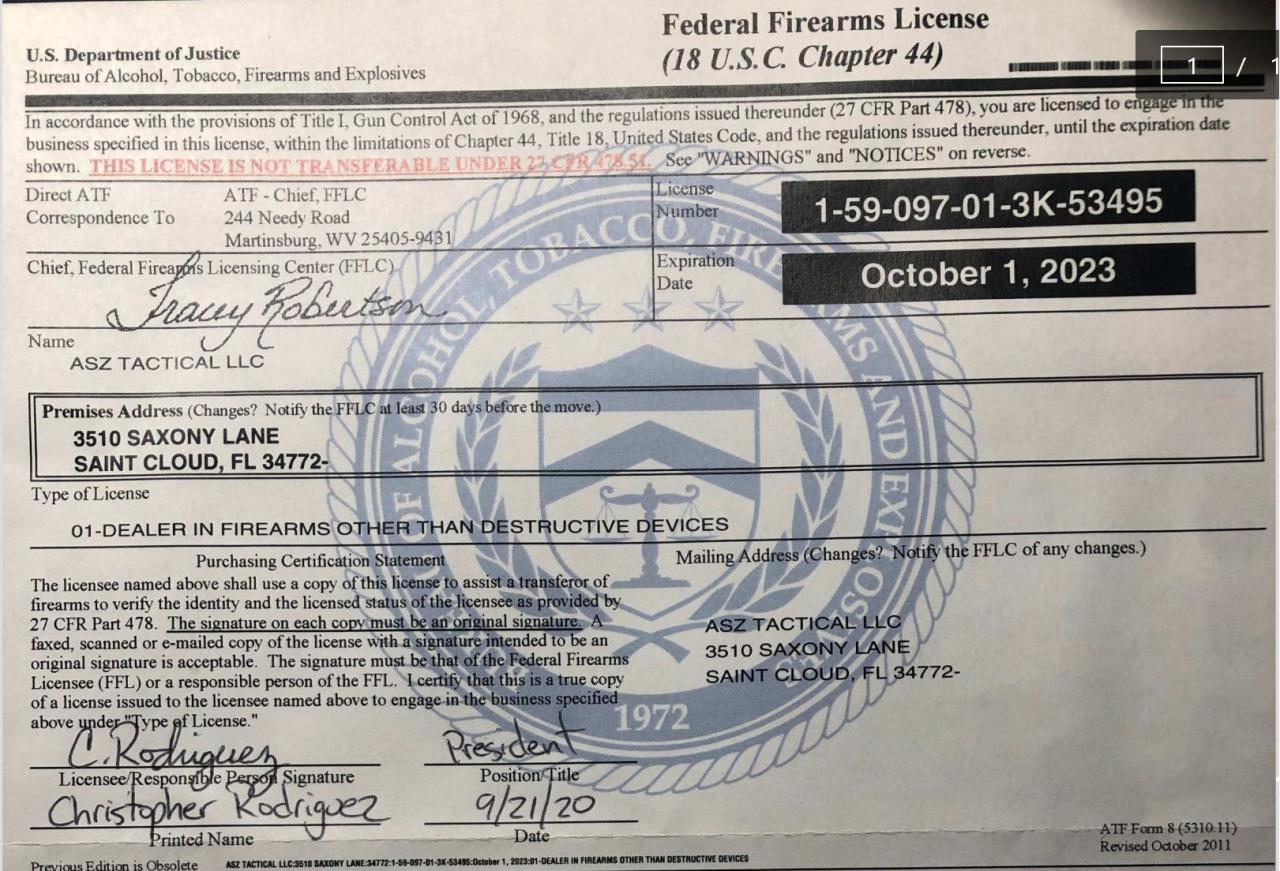
The Federal Firearms License (FFL) application process requires meticulous attention to detail. Thorough completion of the application form is crucial for a smooth and efficient processing. Incomplete or inaccurate information can significantly delay or even prevent approval.
Accurate and complete information is paramount throughout the entire application process. This section will guide you through the steps involved in accurately filling out the application form, highlighting common pitfalls to avoid, and demonstrating how to properly attach supporting documentation.
Completing the Application Form Accurately
Careful completion of the application form is essential for a successful application. Providing truthful and precise details is vital for a smooth and efficient process. Mistakes, even seemingly minor ones, can lead to delays or rejection.
- Review the instructions carefully: Before starting, meticulously review all instructions and guidelines provided with the application form. Understanding the requirements and expectations will prevent errors and ensure you provide the necessary information.
- Use black ink: Employ black ink for all entries. This ensures clarity and avoids any ambiguity in the printed form.
- Print legibly: Ensure all handwritten information is legible. Use a clear and consistent font for all typed responses. Avoid using abbreviations or slang that might not be universally understood.
- Double-check for accuracy: After completing each section, meticulously review your entries to ensure accuracy and completeness. This crucial step helps identify and correct any potential errors before submitting the form.
- Provide all requested information: Failure to provide all requested information can lead to the rejection of the application. Ensure every required field is filled in thoroughly.
Importance of Accurate Information
Submitting accurate information is critical for a successful application. False statements or omissions can result in delays or outright rejection of your application. Maintaining honesty and accuracy throughout the process is essential. This approach builds trust and demonstrates your commitment to compliance with regulations.
Common Errors to Avoid
Certain errors are frequently encountered during the application process. By understanding and avoiding these common pitfalls, you can improve your chances of a successful application.
- Inaccurate business address: Ensure the address provided for your business is current and accurate. Any discrepancy can cause delays.
- Missing signatures: All required signatures must be present and properly executed. Verify that all signatures are notarized where required.
- Incorrect dates: Double-check all dates, particularly those related to birth dates, business establishment, and other critical events.
- Incomplete financial information: Ensure all financial information, including bank statements, is complete and properly documented.
Attaching Required Documents
Proper attachment of supporting documents is essential for a successful application. Organize and label the documents to ensure they’re easily identifiable. The application instructions will clearly Artikel the specific requirements.
- Organize documents logically: Arrange the documents in a logical order to aid in processing. Label each document clearly with the relevant information and the section of the application it corresponds to.
- Ensure all documents are copies: Create copies of all documents, except for original birth certificates. Retain originals for your records.
- Use a transparent cover sheet: For ease of processing, use a transparent cover sheet with the application details and document listing. This aids in streamlining the application review process.
Application Form Section Examples
The following table provides examples of the types of information required in various sections of the application form.
| Section | Example Information |
|---|---|
| Applicant Information | Full name, address, date of birth, social security number |
| Business Information | Business name, address, date of establishment, business type |
| Financial Information | Bank statements, financial records, business licenses |
| Criminal History | Documentation of any prior criminal convictions or arrests |
Submitting the Application: How To Apply For Ffl
Submitting your FFL application involves several crucial steps. Careful handling and proper submission are vital to ensuring your application is processed efficiently and accurately. This section details the methods, required fees, and packaging guidelines.
Submission Methods
The application can be submitted via mail or, in some cases, electronically. The preferred method and the specific process may vary based on the specific FFL application and local regulations. Ensuring the proper method is followed is crucial to expedite the processing time.
- Mail Submission: For mail submissions, it’s critical to package the application documents securely to prevent damage or loss during transit. Use a sturdy envelope or box, clearly labeling it with the recipient’s name, address, and the specific application type. Include all required documents, ensuring they are organized and easily accessible. A certified mail service is recommended for tracking purposes.
- Electronic Submission (if applicable): Some jurisdictions and ATF offices offer online portals for FFL applications. These platforms typically guide applicants through the submission process, ensuring all required information is included and accurately formatted. This method can often expedite the processing time compared to mail submission, but availability is subject to local regulations and the specific application type.
Packaging and Handling
Proper packaging and handling of your application documents are essential. This safeguards the application’s contents during transit, reducing the risk of damage or loss. A sturdy envelope or box, appropriate for the volume of documents, is highly recommended. Labeling the package with the recipient’s name, address, the specific application type, and any tracking information will help expedite processing and ensure the application reaches the correct destination.
Fees and Payment Methods
Application fees vary based on the type of license being applied for and specific regulations. The ATF website provides details on current fees. Payment methods may include money orders, cashier’s checks, or, in some instances, online payment portals. Always confirm the accepted payment methods with the relevant authority before submitting the application.
Submission Process Examples and Timelines
Processing times can vary significantly depending on the submission method, the completeness of the application, and any potential delays in the review process. For example, a mail submission might take several weeks, while an electronic submission could be processed more quickly. Contacting the appropriate agency to inquire about potential processing times is advisable.
Submission Method Table
| Submission Method | Associated Costs | Required Steps |
|---|---|---|
| Application Fee (see ATF website) + potential postage costs | 1. Gather required documents. 2. Complete application form. 3. Package securely. 4. Affix postage. 5. Mail to designated address. | |
| Online (if applicable) | Application Fee (see ATF website) | 1. Gather required documents. 2. Access online application portal. 3. Complete application form online. 4. Submit required documents and pay fee. |
Understanding the Processing Timeline

Obtaining a Federal Firearms License (FFL) is a significant undertaking, and understanding the processing timeline is crucial for applicants. Knowing the expected timeframe and potential delays can help manage expectations and ensure a smooth process. This section delves into the average processing time, factors that influence it, and methods for tracking your application’s status.
Average Processing Time
The Bureau of Alcohol, Tobacco, Firearms and Explosives (ATF) doesn’t publish a definitive average processing time for FFL applications. However, based on industry experience and public records, applications typically take several months to be fully processed. The timeframe can vary widely depending on the complexity of the application and the completeness of the submitted documentation. This variability is crucial to understand.
Factors Affecting Processing Time
Several factors can impact the duration of the ATF’s review process. These factors can often be grouped and categorized for better understanding.
| Category | Factors | Examples |
|---|---|---|
| Completeness and Accuracy of Application Materials | Incomplete or inaccurate applications, missing documentation, or errors in the application form. | Failure to submit required fingerprints, incorrect business address, or a lack of required financial information. |
| Complexity of the Application | The nature and scope of the proposed business operation, including the type of firearms involved, and the number of locations. | A retail gun store application is generally more complex than an application for a small-scale importer. |
| ATF Resources and Staffing | Workload at the ATF, processing backlog, and the number of personnel available to process applications. | During peak seasons or periods of high application volume, processing times might increase. |
| Thoroughness of Background Checks | Comprehensive and rigorous background checks of applicants and employees. | The ATF might need additional information to verify the identity of the applicant or their employees. |
| Additional Information Required | Need for further clarification, additional documentation, or more detailed information. | The ATF might request additional documentation or clarifications to ensure compliance with regulations. |
Tracking Application Status
The ATF provides various methods for tracking the status of your application. It’s important to regularly check for updates and to be patient throughout the process. Contacting the ATF directly or utilizing online resources are helpful steps.
Common Reasons for Delays
There are several reasons why an FFL application might experience delays.
- Incomplete or inaccurate applications often lead to delays. The ATF requires specific documentation, and any missing or incorrect information will necessitate follow-up requests, prolonging the process.
- The complexity of the application can influence the processing time. More extensive or intricate applications may require more time for thorough review and evaluation.
- A high volume of applications can lead to processing delays, similar to the situation for other bureaucratic procedures.
- Rigorous background checks on applicants and employees require time and can contribute to the length of the review process.
- If additional information or documentation is required by the ATF, it will impact the timeline. This is a normal part of the process and should not be cause for undue concern.
Addressing Potential Issues and Appeals

Securing an FFL license is a significant undertaking, and potential issues may arise during the application process. Understanding these potential problems and the appeal process is crucial for applicants. This section will Artikel common obstacles, the appeal procedure, and examples of how to address these challenges.
The ATF’s review process is rigorous, designed to ensure compliance with federal regulations. Applicants should approach the process with meticulous attention to detail and be prepared to address any concerns raised by the agency.
Common Application Issues
Understanding potential issues is key to a successful application. Common concerns include incomplete or inaccurate documentation, discrepancies between the application and supporting materials, or even concerns about the applicant’s background. A thorough review of all required materials before submission is paramount.
- Incomplete or Inaccurate Documentation: This is often the most frequent issue. Applicants may overlook crucial forms, submit incorrect copies of documents, or provide outdated information. Careful review and verification of all documents before submission can mitigate this problem. For example, a missing birth certificate or a mismatched Social Security number could cause delays or rejection.
- Discrepancies in Information: Inconsistencies between the application and supporting documentation can lead to a denial. For instance, a difference in the applicant’s address as listed on the application versus the address on a utility bill can raise red flags. Carefully cross-referencing all information and ensuring accuracy is critical.
- Background Check Concerns: The ATF performs extensive background checks to verify the applicant’s suitability. A prior conviction, even if old, or a record of financial issues could potentially be a problem. Applicants should fully disclose all relevant information, as omissions or misrepresentations can result in a denial.
Appeal Process
If an application is denied, the applicant has the right to appeal. The appeal process is structured to allow the applicant to present additional information and address the concerns raised by the ATF.
- Understanding the Denial Letter: The denial letter will explicitly state the reasons for the rejection. Carefully review the letter, understanding the specific grounds for denial. This is crucial for preparing a compelling appeal.
- Gathering Supporting Documentation: Gather any new information or evidence that addresses the specific concerns raised in the denial letter. This might include additional documents, explanations, or clarifications.
- Formulating a Clear and Concise Appeal: Present a compelling argument, addressing each point of concern in the denial letter. Clearly and concisely explain the situation and how the issues have been resolved. Provide evidence supporting the claim, ensuring the appeal is well-supported.
- Submitting the Appeal: Follow the instructions Artikeld in the denial letter for submitting the appeal. Use the prescribed format, ensure all necessary documents are attached, and submit it within the specified timeframe.
Potential Issues, Causes, and Solutions
| Potential Issue | Cause | Possible Solution |
|---|---|---|
| Incomplete application | Missing required forms, incorrect information | Review application instructions, correct any errors, resubmit complete application |
| Discrepancies in information | Inconsistencies between application and supporting documents | Verify accuracy of all information, provide clarifying documents, contact ATF for guidance |
| Background check issues | Prior convictions, financial problems | Provide complete and accurate information about background, explain any circumstances, submit supporting documentation |
| Administrative errors | Clerical mistakes by ATF | Contact ATF directly to resolve administrative errors. Follow up with written correspondence. |
Maintaining Compliance Post-Licensing
![FFL License Requrements by Firearm Attorney - Do you Qualify? [2020]](https://tabatabol.com/wp-content/uploads/2025/06/FFL-License-Requirements-1-1024x512-1.jpg "FFL License Requrements by Firearm Attorney - Do you Qualify? [2020]")
Once you receive your Federal Firearms License (FFL), the responsibilities and requirements don’t end. Maintaining compliance is a continuous process that ensures your business operates legally and ethically. This involves understanding and adhering to a multitude of regulations and guidelines.
A crucial aspect of operating a compliant FFL business is diligent record-keeping. Accurate and complete records are essential for demonstrating compliance with all applicable laws and regulations. This includes tracking firearm sales, documenting training requirements for employees, and maintaining accurate inventory information.
Record-Keeping and Documentation
Thorough record-keeping is paramount for demonstrating compliance with federal, state, and local regulations. Proper documentation is not just a formality; it’s a crucial component of maintaining a legally sound FFL business. Maintaining detailed records of all transactions, including date, time, purchaser information, and firearm details, is essential. These records should be kept for a specific timeframe, often dictated by regulations.
Compliance with Regulations
Compliance with regulations encompasses a wide array of requirements. This includes adhering to background check procedures, ensuring proper storage and handling of firearms, and maintaining accurate and up-to-date business records. Failure to comply with these regulations can lead to serious consequences.
Best Practices for Maintaining a Compliant FFL Business
Implementing best practices is crucial for an FFL business. Proactive measures contribute significantly to ensuring ongoing compliance. This includes regularly reviewing and updating your business practices to reflect any changes in federal, state, or local laws.
Consequences of Non-Compliance
Non-compliance with federal, state, and local regulations can lead to severe consequences. These consequences can range from fines and penalties to the suspension or revocation of your FFL license. Understanding and adhering to all applicable regulations is crucial for maintaining a compliant FFL business.
Key Compliance Areas and Guidelines, How to apply for ffl
Maintaining compliance involves understanding and adhering to numerous requirements. This section Artikels key compliance areas and associated guidelines.
- Background Checks: Strict adherence to background check procedures is essential. This includes verifying all purchasers against the National Instant Criminal Background Check System (NICS) database and documenting each check thoroughly. Failure to perform checks correctly can result in severe penalties.
- Firearm Storage and Handling: Safeguarding firearms is critical. Your business must comply with regulations regarding storage and handling procedures to prevent theft or unauthorized access. Proper security measures are vital for avoiding legal issues.
- Record Retention: Accurate record-keeping is vital. Maintain detailed records of all firearm transactions, including dates, times, purchaser information, and firearm details. The specific record-retention period is often dictated by regulations.
- Employee Training: Training your staff on compliance requirements is essential. Ensuring your staff understands and follows all regulations related to firearm sales, storage, and handling is critical. This includes proper procedures for conducting background checks and handling customer inquiries.
- Business Licensing and Permits: Maintaining up-to-date business licenses and permits is crucial. Ensure your business complies with all state and local licensing requirements. Staying abreast of changes to licensing requirements is important for avoiding potential issues.
FAQ Explained
How to apply for ffl – What are the typical processing times for FFL applications?
Processing times vary depending on factors such as completeness of the application and the volume of applications being processed. Generally, it can take several weeks to several months.
What are the different types of FFLs available, and what are their requirements?
The types of FFLs and their specific requirements are detailed in the provided document, with specific categories for manufacturers, importers, wholesalers, and retailers. These are defined by the specific scope of the business and the volume of firearms handled.
What are some common mistakes to avoid during the application process?
Inaccuracies in the application form, missing documents, or incomplete financial statements can lead to delays or rejection. Ensuring accuracy and completeness in every step is vital.
What are the costs associated with an FFL application?
Specific fees vary depending on the type of FFL. Information on application fees, background check costs, and other associated expenses are Artikeld in the application materials.