Identifying Starter Problems
A car’s starter motor is crucial for starting the engine. Understanding the symptoms of a failing starter is vital for timely repairs and preventing further damage. A malfunctioning starter can range from minor inconveniences to major engine problems. Identifying the issue early on can save you significant repair costs.
Common Symptoms of a Bad Starter
A faulty starter motor can manifest in several ways. Diagnosing the problem accurately involves considering potential alternative causes. The following table Artikels common symptoms and possible contributing factors.
| Symptom | Possible Cause (Other than Starter) | Likely Cause (Starter) |
|---|---|---|
| Clicking sound when turning the key | Dead battery, faulty ignition switch, or low battery voltage. | Weak or damaged starter motor solenoid, or a worn starter motor gear. |
| Grinding or grinding/clicking sound when turning the key | Worn or damaged engine components (e.g., bearings, gears), or an issue with the starter engaging with the flywheel. | Worn starter motor gears, or damage to the starter motor components like the pinion gear. |
| No sound when turning the key | Dead battery, faulty ignition switch, or a completely disconnected battery cable. | Completely failed starter motor, a broken starter motor cable, or a damaged starter motor gear. |
| Engine cranks slowly or intermittently | Low battery, a bad alternator, or a problem with the engine’s fuel system. | Worn starter motor, a failing starter motor solenoid, or a weak or damaged starter motor battery cable. |
Differentiating a Bad Starter from Other Issues
It’s essential to distinguish between a bad starter and other potential problems. A dead battery will typically exhibit no cranking sound at all. A faulty ignition switch might result in clicking or intermittent cranking attempts. A bad starter, in contrast, can display a range of sounds, from clicks to grinding.
Starter Sound Manifestations
The sound produced by a starter motor can significantly vary, depending on the specific problem. A clicking sound suggests a potential issue with the starter solenoid or the starter motor itself. A grinding noise indicates damage to the starter’s internal components. In contrast, no sound at all often points to a completely failed starter motor.
Comparison of Starter Sounds During Cranking
The following table compares the sounds of a healthy starter to those of a failing one during cranking.
| Sound | Healthy Starter | Failing Starter |
|---|---|---|
| Cranking Sound | Consistent, smooth, and robust sound | Clicking, grinding, sputtering, or a weak sound |
| Speed | Rapid and strong cranking speed | Slow or intermittent cranking speed |
| Duration | Consistent and uninterrupted cranking | Short cranking duration or complete lack of cranking |
Visual Inspection and Testing
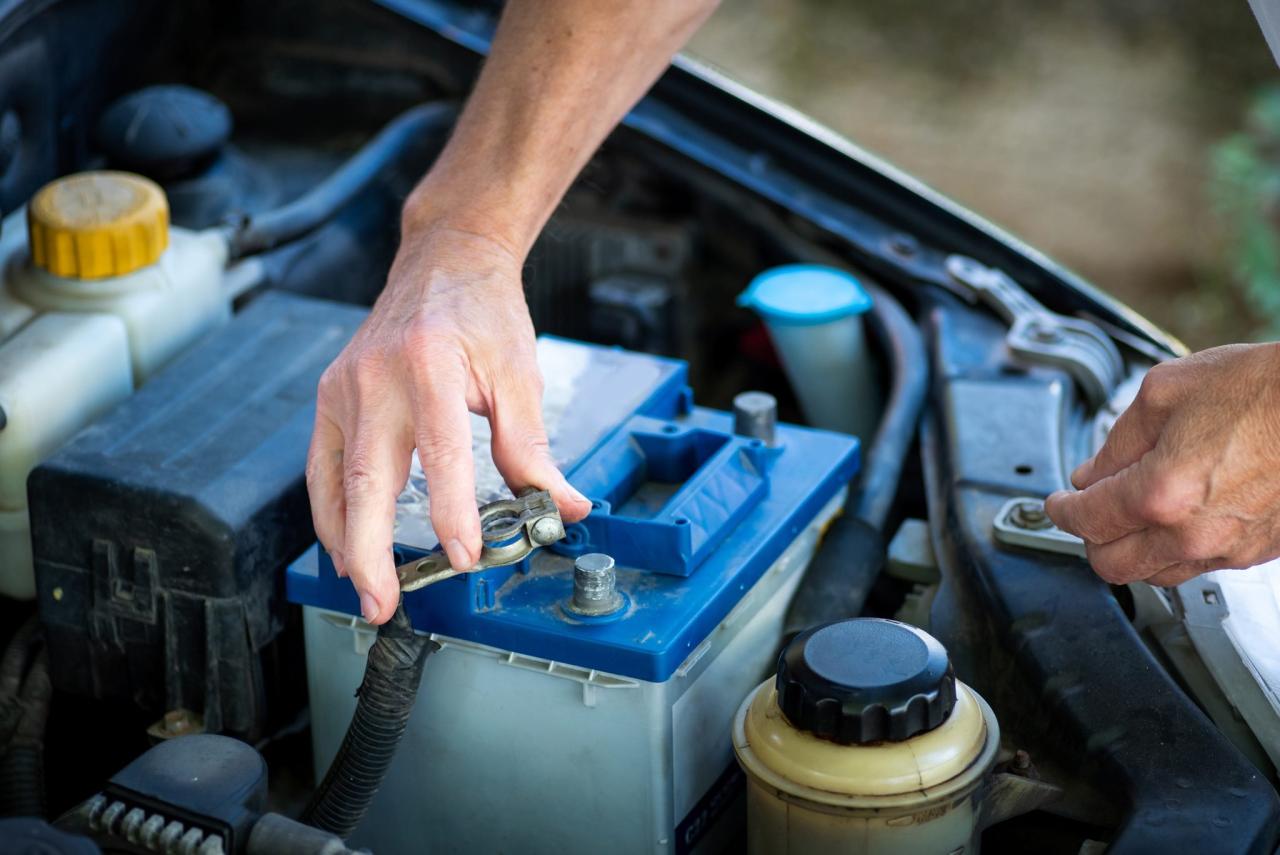
A visual inspection of the starter motor can often reveal obvious signs of trouble. Careful examination combined with multimeter testing can provide a comprehensive diagnosis. This section Artikels a methodical approach for both procedures.
Visual inspection is a crucial initial step in diagnosing starter problems. Identifying physical damage or loose connections allows for a more focused testing approach, saving time and resources.
Visual Inspection Procedure
Thorough visual inspection is the first step in diagnosing starter motor issues. Look for signs of damage, corrosion, or loose connections. This approach can help pinpoint the source of the problem.
- Inspect the starter housing for cracks, dents, or signs of overheating. These indicators can suggest underlying mechanical issues.
- Check the terminals and wiring for corrosion, damage, or loose connections. Corrosion and loose connections are common culprits for starter problems.
- Verify the condition of the wiring harness connecting the starter to the battery and the rest of the vehicle’s electrical system. Damage or corrosion in these wires can disrupt power flow.
- Examine the starter’s mounting bolts for tightness. Loose mounting can cause vibrations and premature wear.
- Look for any signs of fluid leakage or contamination around the starter. Fluid leaks can affect electrical components and cause further issues.
Multimeter Testing
Using a multimeter to test starter motor resistance is a critical step in diagnosing electrical problems. A reliable multimeter reading provides valuable data for determining the starter’s operational status.
| Step | Action | Expected Result (Good Starter) | Expected Result (Bad Starter) |
|---|---|---|---|
| 1 | Measure resistance between the starter’s positive terminal and the battery positive terminal. | Low resistance (typically less than 1 ohm). | High resistance (greater than 10 ohms). |
| 2 | Measure resistance between the starter’s negative terminal and the battery negative terminal. | Low resistance (typically less than 1 ohm). | High resistance (greater than 10 ohms). |
| 3 | Measure resistance between the starter’s two positive terminals. | High resistance (greater than 100 ohms). | Low resistance (less than 1 ohm). |
| 4 | Measure resistance between the starter’s two negative terminals. | High resistance (greater than 100 ohms). | Low resistance (less than 1 ohm). |
A good starter will typically display low resistance readings between terminals, indicating a good electrical connection. Conversely, a bad starter will often show high resistance readings, suggesting a break in the circuit or damaged internal components.
How to tell if car starter is bad –
Examples of Multimeter Readings:
- Good Starter: Reading of 0.2 ohms between positive terminal and battery positive terminal, 0.1 ohms between negative terminal and battery negative terminal, and over 100 ohms between positive terminals, and over 100 ohms between negative terminals.
- Bad Starter: Reading of 15 ohms between positive terminal and battery positive terminal, 100 ohms between negative terminal and battery negative terminal, and 0.5 ohms between positive terminals, and 0.2 ohms between negative terminals.
Troubleshooting Specific Issues: How To Tell If Car Starter Is Bad

Troubleshooting starter motor problems often involves a systematic approach. Identifying the exact nature of the issue is crucial for effective repair, avoiding unnecessary replacements, and saving time and money. Understanding the different scenarios where the starter might malfunction and the potential causes behind them is vital for a successful diagnosis.
Different starter motor problems exhibit unique symptoms, and pinpointing the root cause can be a detective work process. This section details various scenarios, potential causes, and comparisons to help you understand and isolate the problem. We’ll also Artikel a method for determining if the starter itself or a related component is the culprit.
Starter Turns, Engine Doesn’t Crank
This scenario suggests a problem beyond the starter motor itself. Several components can be at fault, including the ignition switch, the wiring harness, or even the engine’s internal components.
- Ignition Switch Malfunction: The ignition switch might not be properly transmitting the signal to activate the starter circuit. This is often evident in the absence of any other electrical symptoms related to the ignition. A simple test is to check for continuity between the ignition switch and the starter relay using a multimeter. If there’s a break in the circuit, the ignition switch is likely the culprit.
- Wiring Harness Issues: A damaged or corroded wire within the wiring harness can prevent the current from flowing correctly. Visual inspection of the wiring for frayed wires, loose connections, or corrosion is important. Using a multimeter to test the continuity of the wiring harness between the ignition switch and the starter is essential.
- Internal Engine Issues: Sometimes, problems with the engine itself, such as a seized engine or a broken timing chain, can prevent the engine from turning even if the starter engages. Listening for unusual sounds or feeling for resistance while attempting to crank the engine can help pinpoint if the problem lies within the engine.
Starter Turns Slowly or With Difficulty
This symptom often indicates a problem with the starter itself or a component that’s hindering its engagement with the engine.
- Worn Starter Gear: Over time, the starter gear teeth can wear down, making it difficult for the starter to engage with the flywheel. This will typically be accompanied by a grinding or dragging noise during the cranking process. A visual inspection of the gear teeth can confirm the wear.
- Faulty Starter Solenoid: The starter solenoid is responsible for engaging the starter motor. If it’s malfunctioning, the starter might not engage properly or might engage intermittently. A common sign of a faulty solenoid is a clicking sound instead of the typical engagement sound. Checking the solenoid’s connections and its electrical components is crucial.
- Battery Issues: A weak or failing battery can’t provide enough power to the starter motor, leading to slow or sluggish cranking. Checking the battery’s voltage is essential, and if it’s low, recharging or replacing the battery might resolve the issue.
Starter Doesn’t Engage at All
This often indicates a serious issue with the starter’s electrical system.
- Fuse or Relay Problems: A blown fuse or a malfunctioning relay can prevent the starter from receiving the necessary power. Checking the fuses and relays in the vehicle’s electrical system is a good starting point. A multimeter can help confirm the correct amperage in the circuits.
- Starter Motor Failure: In some cases, the starter motor itself may be completely damaged. A starter motor failure can cause complete lack of engagement. This is often indicated by a complete lack of sound or action when attempting to crank the engine.
Determining the Culprit
A systematic approach is crucial. Begin by visually inspecting the starter motor and related components for any obvious damage or issues. Then, test the electrical connections and components, including the battery, fuses, relays, and the ignition switch, using a multimeter. If the electrical checks are okay, the problem is likely mechanical.
Starter Replacement Considerations

Proper starter replacement is crucial for a reliable vehicle start-up. Incorrect replacement can lead to further damage and unnecessary costs. Careful attention to detail and a methodical approach are essential for a successful repair. Following the correct procedure ensures the new starter integrates seamlessly with the existing electrical system.
Replacing a faulty starter motor requires precise knowledge of the specific vehicle model. Using a compatible starter is critical to ensure proper functionality and prevent issues like incorrect amperage draw or incompatibility with other electrical components. A mismatched part can cause problems ranging from intermittent starting issues to complete failure.
Correct Starter Selection
Selecting the correct starter motor is paramount for ensuring compatibility and optimal performance. This involves referencing the vehicle’s specifications and ensuring the new starter meets the exact requirements of the engine and electrical system. Incorrect starter selection can lead to a variety of issues, including reduced performance, electrical overload, and even engine damage. Consult the vehicle’s repair manual or a trusted mechanic for the correct part number. Online resources can also be helpful, but verifying the information against official sources is vital.
Starter Replacement Procedure
Following a structured replacement procedure minimizes the risk of damage and ensures a successful repair. The table below Artikels a step-by-step approach for replacing a starter motor.
| Step | Action | Tools Required |
|---|---|---|
| 1 | Disconnect the negative battery terminal. | Screwdriver, wrench |
| 2 | Locate and disconnect all wires connected to the old starter. Carefully note the wire connections. | Screwdriver, wrench, wire strippers, electrical tape |
| 3 | Remove any mounting hardware securing the old starter to the engine block. | Socket wrench set, various size sockets, ratchet |
| 4 | Carefully remove the old starter motor from its mounting location. | Socket wrench set, various size sockets, ratchet |
| 5 | Inspect the mounting surfaces for damage or corrosion. Clean and prepare the mounting surfaces if necessary. | Wire brush, sandpaper, cleaning solution |
| 6 | Install the new starter motor, ensuring proper alignment and securing it with the correct mounting hardware. | Socket wrench set, various size sockets, ratchet |
| 7 | Connect the wires to the new starter, precisely aligning them with the corresponding terminals. | Screwdriver, wire strippers, electrical tape |
| 8 | Reconnect the mounting hardware and tighten securely. | Socket wrench set, various size sockets, ratchet |
| 9 | Reconnect the negative battery terminal. | Screwdriver, wrench |
| 10 | Test the starter to ensure proper functionality. | None |
Tools Required for Starter Replacement
The following tools are typically needed for a starter replacement:
- Socket wrench set (various sizes)
- Ratchet
- Screwdrivers (Phillips and flathead)
- Wrench (various sizes)
- Wire strippers
- Electrical tape
- Cleaning solution and rags
- Gloves
Safety Precautions
Working on a car’s electrical system requires adherence to safety precautions. Improper procedures can result in electrical shock or damage to other components. The table below Artikels key safety considerations.
| Safety Consideration | Action |
|---|---|
| Disconnect the battery | Ensure the negative terminal is disconnected before any electrical work is performed. |
| Use appropriate personal protective equipment (PPE) | Wear gloves and eye protection to prevent injury. |
| Work in a well-ventilated area | Avoid working in confined or poorly ventilated spaces. |
| Avoid contact with electrical components | Ensure hands and tools are not touching live wires. |
| Double-check connections | Verify all connections are secure and properly insulated. |
Connecting Starter Wires and Terminals
Proper wire connection is essential for a reliable starter. Incorrect connections can lead to poor performance or damage. Ensure each wire is correctly attached to its designated terminal. Use appropriate wire connectors and electrical tape to secure the connections and prevent short circuits. Refer to the vehicle’s wiring diagram for specific terminal designations if necessary.
Prevention and Maintenance
Proper preventative maintenance is crucial for extending the lifespan of your car’s starter motor. Neglecting routine checks can lead to premature failure, resulting in costly repairs and inconvenience. A well-maintained starter will reliably start your vehicle, contributing to a smoother driving experience.
Regular attention to detail and proactive maintenance significantly reduce the risk of unexpected starter problems. This proactive approach allows you to identify and address potential issues before they escalate into major breakdowns. This section Artikels preventative measures and routine checks to keep your starter motor in top condition.
Preventive Measures
Preventive measures, when followed consistently, can significantly increase the lifespan of your car’s starter. These proactive steps help minimize the wear and tear on components, ensuring reliable performance and reducing the risk of premature failure. Proper maintenance can save you money in the long run by avoiding costly repairs.
- Regular Battery Maintenance: A healthy battery is essential for a functioning starter. Ensure your battery terminals are clean and tight, and check the battery’s electrolyte level regularly. A weak or damaged battery can strain the starter, leading to premature wear.
- Monitor Engine Oil Levels and Quality: Adequate engine oil is crucial for proper lubrication of moving parts within the engine. Low oil levels can lead to increased friction, placing extra strain on the starter. Using the correct grade of oil and maintaining appropriate levels is vital.
- Inspect Wiring and Connections: Inspect the wiring harness and connections to the starter motor for any signs of damage, corrosion, or looseness. These issues can disrupt the flow of electricity, hindering the starter’s ability to engage. Clean and secure all connections to ensure reliable electrical flow.
- Keep the Starter Area Clean: Prevent debris and contaminants from accumulating around the starter motor. This is particularly important in dusty or dirty environments. Regular cleaning can help avoid potential electrical shorts or mechanical issues.
Routine Maintenance Checks
Regularly checking specific components and systems can help detect potential starter problems early. This early identification allows for timely intervention and prevents minor issues from escalating into major breakdowns. By implementing a schedule of routine checks, you can maintain optimal starter performance and extend its lifespan.
- Visual Inspection: Visually inspect the starter motor for any signs of damage, such as cracks, corrosion, or unusual wear on the housing or internal components. Look for any loose or damaged wires. Visual checks are critical in identifying potential issues early.
- Battery Voltage Check: Regularly test the battery voltage to ensure it is within the appropriate range. A low battery voltage can lead to starter issues. Using a multimeter to measure battery voltage is a simple and effective method.
- Starter Engagement Test: Periodically engage the starter motor to ensure smooth and rapid engagement. A sluggish or jerky response can indicate potential problems. Note any unusual noises or vibrations during the engagement process.
Maintenance Schedule
A well-structured maintenance schedule helps ensure that your car’s starter is always in optimal condition. This table provides a recommended schedule for routine maintenance tasks, their frequency, and the tools needed.
| Maintenance Task | Frequency | Tools Required |
|---|---|---|
| Visual Inspection of Starter Motor | Monthly | Eyesight, flashlight |
| Battery Voltage Check | Monthly | Multimeter |
| Starter Engagement Test | Quarterly | None |
| Cleaning of Starter Motor Area | Quarterly | Brush, compressed air |
Importance of Starter Cleaning, How to tell if car starter is bad
Keeping the starter motor clean and free of debris is crucial for its longevity. Accumulated dirt, dust, and other contaminants can impede airflow, potentially leading to overheating. This, in turn, can damage internal components, reducing the starter’s reliability and lifespan.
Maintaining a clean environment around the starter is essential for its proper function.
Environmental Factors
Certain environmental factors can negatively impact a car’s starter motor. Exposure to extreme temperatures, excessive moisture, or corrosive substances can accelerate deterioration. Understanding these environmental influences helps in taking proactive steps to protect the starter.
- Extreme Temperatures: Prolonged exposure to extreme heat or cold can stress the components, potentially causing damage to the insulation or internal mechanisms.
- Moisture and Humidity: Moisture can lead to corrosion of metal parts, causing electrical issues and reducing the starter’s effectiveness. High humidity environments can exacerbate these problems.
- Exposure to Corrosive Substances: Exposure to chemicals or substances that are corrosive can accelerate the deterioration of the starter’s components, reducing its lifespan significantly. This is particularly important in industrial or agricultural environments.
FAQ Overview
What are the most common symptoms of a bad starter?
Common symptoms include clicking, grinding, or no sound at all when attempting to start the engine. Sometimes, the starter might turn but the engine won’t crank.
How long does a car starter typically last?
Starter lifespan varies significantly depending on driving habits, maintenance, and environmental factors. However, with proper care, a well-maintained starter can last for several years.
Can a bad battery cause starter problems?
Yes, a weak or dead battery can prevent the starter from functioning correctly. Always check the battery’s condition before attributing problems solely to the starter.
What tools are needed for starter replacement?
Common tools include socket wrenches, screwdrivers, pliers, and a multimeter. Specific tools might be required depending on your vehicle’s make and model.